
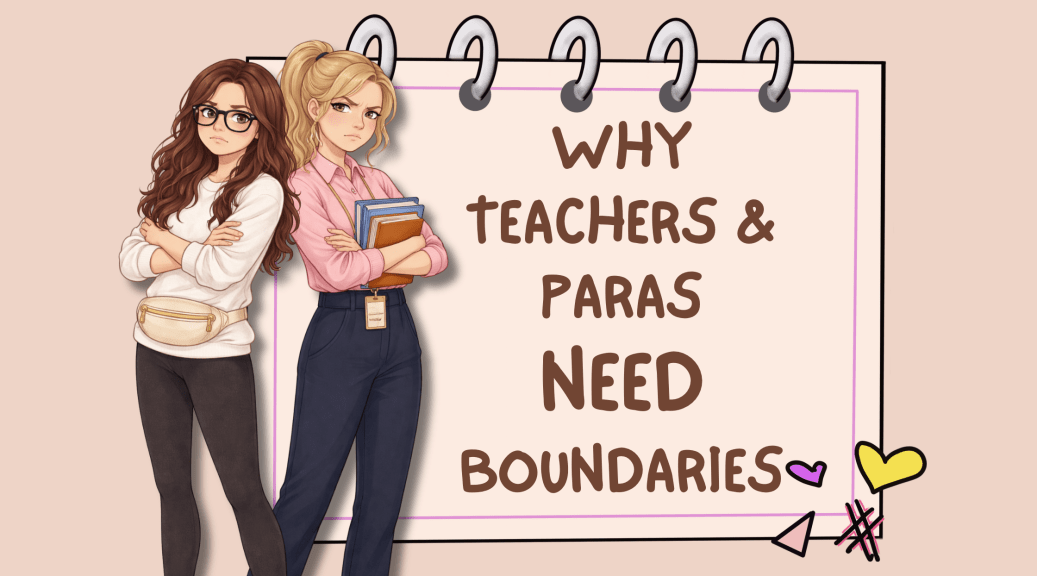
Let’s talk about something that doesn’t really get said out loud in schools… but everyone kind of sees.
When you work in a classroom as a paraprofessional, you’re usually paired with the same teacher every day.
Same room.
Same students.
Same situations—sometimes all day long.
So naturally… you build a relationship.
You laugh.
You vent.
You survive the day together.
And honestly? That’s a good thing.
But there’s a line that can get crossed without anyone even realizing it.
And when it does, it can quietly affect the entire classroom.
When “we’re just close” starts to look like favoritism
Let’s just be real for a second.
When a teacher and a para get really close, it can start to look like favoritism—even if that’s not the intention.
It shows up in small ways:
- always being paired together
- inside jokes during the day
- backing each other up no matter what
And sometimes you don’t even notice it happening.
But other staff do.
And let’s be honest… school environments can already feel a little cliquey.
So when it looks like there’s a “team within the team,” it can create tension fast.
The roles start to blur (and things get awkward… fast)
This is where it gets tricky.
Because at the end of the day, a teacher and a paraprofessional do not have the same role.
And when the relationship becomes too casual, the lines can start to blur.
You might start seeing things like:
- “Wait… who’s actually making the decision here?”
- moments where directions aren’t followed because it feels too informal
- subtle power struggles (even if no one says it out loud)
It doesn’t always turn into a big issue—but it can create confusion in the classroom.
And kids pick up on that so fast.
And yes… sometimes it turns into a little workplace drama
Okay… we’re going to say it.
Even the best friendships have moments.
And when your “work bestie” is also the person you rely on all day in the classroom?
That tension doesn’t just stay in your head.
It shows up in:
- short responses
- awkward silence
- that “we’re fine but not really fine” energy
And meanwhile… the students are just sitting there like 👀
It doesn’t take much for that shift to affect the flow of the classroom.
The part no one likes to admit
Sometimes it’s not even about conflict.
Sometimes it’s just… a vibe.
The whispering.
The laughing.
The “I’ll tell you later” moments.
And other staff notice.
It can unintentionally make people feel:
- excluded
- uncomfortable
- or like they’re not part of the team
And in a school setting, where collaboration really matters, that can quietly impact the whole environment.
Students are always watching (yes… always)
This part is huge.
Students notice everything.
They notice:
- who talks to who
- who gets along
- who seems “closer”
And they absolutely pick up on tone and body language.
So when adults model:
- professionalism
- respect
- clear communication
That sets the tone.
But when things feel cliquey, tense, or overly personal…
they see that too.
So what DOES a healthy teacher–para relationship look like?
It’s not about being cold or distant.
You can absolutely:
- enjoy working together
- laugh
- support each other
- have a good dynamic
But it stays grounded in:
- mutual respect
- clear roles
- professionalism
Think:
friendly… but not overly personal
supportive… but still structured
A little real-life perspective
As a paraprofessional, you’re in a unique position.
You’re working closely with one teacher every single day, and it’s easy for that relationship to naturally grow.
And honestly, that connection can make the day better.
But over time, I’ve realized something:
The strongest classroom environments are the ones where everyone knows their role—and respects it.
That balance makes everything run smoother.
Why boundaries actually protect YOU
This is the part people don’t always think about.
Boundaries aren’t about being distant.
They actually protect:
- your professionalism
- your role in the classroom
- your peace
Because when things stay clear, you avoid:
- confusion
- tension
- awkward situations later
And let’s be honest… we have enough going on during the day already.
We don’t need extra drama layered on top of it.
FAQs About Teacher and Paraprofessional Boundaries
Should teachers and paraprofessionals be friends?
It’s natural to have a positive relationship, but keeping professional boundaries helps maintain a healthy classroom environment and prevents misunderstandings.
Why are boundaries important between teachers and paras?
Clear boundaries prevent favoritism, role confusion, and conflict, while supporting a more effective and respectful classroom dynamic.
What is the role of a paraprofessional in the classroom?
A paraprofessional supports students, assists with instruction, and helps maintain classroom structure while working under the guidance of the teacher.
Final thoughts
At the end of the day, this isn’t about saying you can’t enjoy the people you work with.
It’s about recognizing that in a classroom setting, relationships impact more than just you.
They affect:
- your team
- your environment
- and your students
And sometimes, keeping things just a little more professional…
actually makes everything feel a lot easier.

 Classroom Chíc