
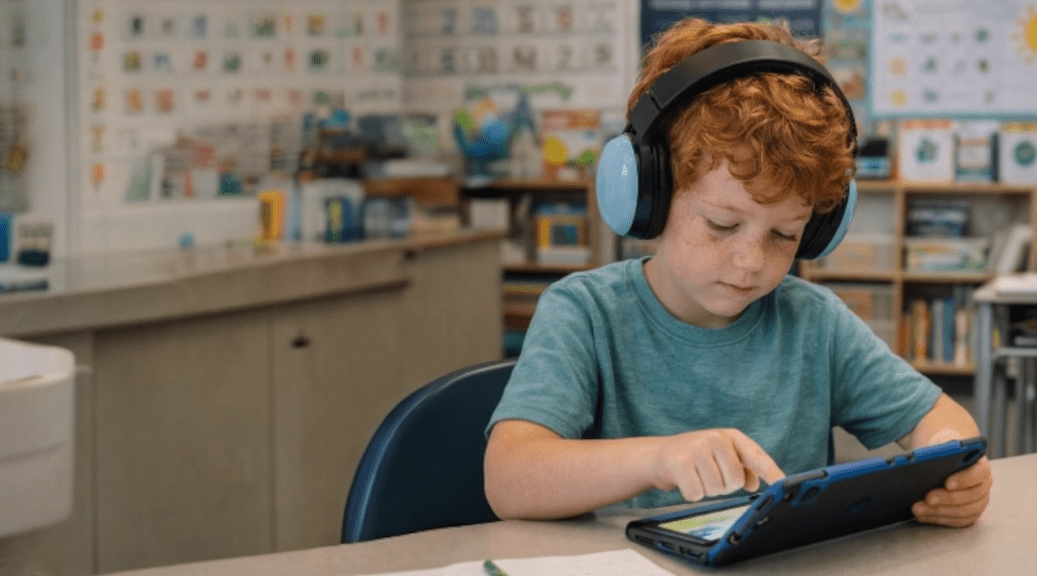
Let’s talk about something we don’t always say out loud in special education…
iPads are not always helpful in autism classrooms.
And I know—that’s not the popular opinion.
Because on paper, iPads sound amazing:
- communication tools
- engaging apps
- independent learning
But in real-life special education classrooms?
It’s a little more complicated than that.
And if you’ve worked in a self-contained autism classroom, you probably already know exactly what I mean.
The reality: iPads quickly become the biggest trigger in the room
Let’s just start here—because this is the biggest one.
iPads don’t stay “just a tool.”
They become:
👉 the reward
👉 the expectation
👉 and very quickly… the problem
I’ve seen:
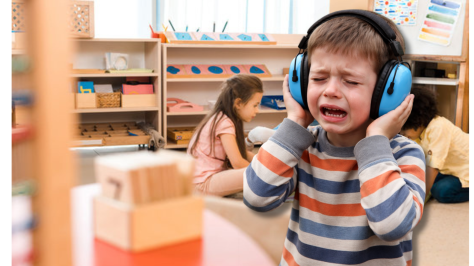
- full meltdowns over iPad time
- students refusing work unless they get it
- arguments over who had it longer
And the second one student gets it?
Everyone notices.
And that’s when things start to spiral.
Especially for students with autism who already struggle with:
- fairness
- transitions
- emotional regulation
The iPad goes from “helpful” to “high-stress” really fast.
Consistency has to be PERFECT (and let’s be honest… it rarely is)
Here’s the hard truth.
iPads only work in special education classrooms if:
👉 expectations are clear
👉 routines are consistent
👉 and every adult follows it exactly the same way
And in real classrooms?
That’s hard.
I’ve seen situations where:
- one student gets it every morning
- another is told “later”… and later never comes
- someone sneaks extra time
And suddenly you’re dealing with:
- frustration
- confusion
- behavior escalations
Because in special ed, especially autism classrooms…
👉 structure is EVERYTHING
And once that structure breaks, it’s really hard to get it back.
iPads can turn into an escape (instead of a learning tool)
This one is big.
Many students in autism classrooms already struggle with:
- avoiding tasks
- shutting down
- disengaging
And the iPad?
It becomes the easiest escape.
I’ve seen students:
- completely zone out
- swipe through apps without purpose
- avoid all interaction
And yes… they’re quiet.
But they’re not learning.
And sometimes we allow it because it feels easier in the moment.
But long term?
It doesn’t help them grow.
They can replace connection (and that’s a problem)
This is the part that doesn’t get talked about enough.
Special education classrooms—especially autism classrooms—are built on:
- relationships
- trust
- interaction
But iPads can quietly replace that.
Instead of:
- talking
- playing
- learning through interaction
Students retreat into the screen.
And let’s be real for a second…
Sometimes adults allow it because the room feels calmer.
But calm doesn’t always mean effective.
And connection matters more.
Hands-on learning starts to lose the battle
There are SO many better tools for autism classrooms:
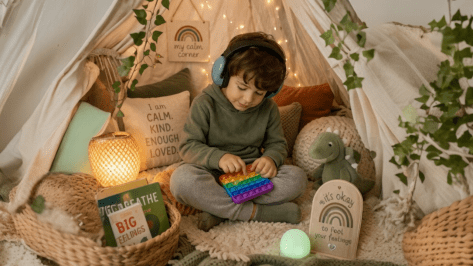
- sensory bins
- fidgets
- movement breaks
- building activities
- real-world play
But once a student gets used to an iPad?
Those things don’t compete.
And I’ve seen students lose interest in:
- hands-on learning
- creative play
- social interaction
Because a screen is just… easier.
A real-life moment (because you’ve probably lived this too)
You finally give one student the iPad.
Everything is calm for a second.
And then…
Another student notices.
Then another.
And suddenly you’re explaining:
👉 “It’s not your turn yet”
👉 “You already had it”
👉 “We’ll do it later”
And you can FEEL the shift happening.
And you’re thinking:
“Why did I bring this out…” 😅
Are iPads always bad in special education?
No.
Let’s be fair.
iPads CAN be helpful for:
- communication devices (AAC)
- structured learning apps
- very controlled reward systems
But that’s the key:
👉 controlled
👉 intentional
👉 consistent
Without that?
They can do more harm than good.
FAQs About iPads in Autism Classrooms
Are iPads good for students with autism?
iPads can be helpful for communication and structured learning, but without consistent use and clear boundaries, they can lead to behavior challenges.
Why do iPads cause meltdowns in the classroom?
iPads are highly preferred items, which can create frustration, unfairness, and difficulty with transitions—especially for students with autism.
Should iPads be used for behavior management?
They can be used carefully as part of a structured system, but over-reliance can lead to avoidance behaviors and emotional dysregulation.
Final thoughts
If you’ve ever felt like iPads make your classroom harder instead of easier…
You’re not imagining it.
In autism classrooms, what students need most is:
- structure
- connection
- real-world engagement
And while technology has its place…
It should never replace those things.


 Classroom Chíc