Tag Archives: autism para

Why Paraprofessionals Burn Out (The Honest Truth No One Talks About)

Before I became a paraprofessional, no one sat me down and said this out loud:

This job will take more out of you than you expect.

Not in a dramatic way at first.
Not in a “I can’t do this” kind of way.

But in a quiet, steady way… where one day you realize you’re just really tired.

And not just physically.

Mentally. Emotionally. Even spiritually sometimes.


I’ve been a paraprofessional for 4 years in a public elementary school, working in a self-contained autism classroom. I’ve worked across grade levels, and I’m currently with 3rd grade.

And while I expected the job to be busy… I didn’t fully understand how much of myself I would be giving every single day.

Because working in a special education classroom isn’t just about helping.

It’s about being constantly aware.

You’re watching for triggers.
You’re adjusting in real time.
You’re trying to stay one step ahead of behaviors that can shift quickly.

Even when everything looks calm on the outside, your mind is still working.


There are moments during the day where everything changes in seconds.

A student becomes overwhelmed.
A behavior escalates.
The room shifts.

And in that moment, you don’t really get time to think.

You just respond.

You stay calm—or at least try to.
You redirect.
You support.
You keep everyone safe.

And then a few minutes later, it’s over.

The classroom resets.

But your body doesn’t reset as quickly.

You’re still holding that tension, even if no one else sees it.


And that’s the part people don’t always understand about being a paraprofessional.

They don’t see how much you’re holding in just to keep the environment steady.

They don’t see the mental energy it takes to stay patient when you’re overwhelmed.

They don’t see the moments where you walk away thinking,
“Did I handle that right?”


There are also days where it’s not even one specific moment—it’s just the weight of everything combined.

The constant movement.
The unpredictability.
The feeling of always needing to be “on.”

And sometimes, feeling like what you do isn’t fully understood.

Like you’re doing a lot, but it’s happening quietly… in the background.


And then you go home.

And this is the part that really doesn’t get talked about enough.

I’m a mom of two school-aged kids. I work all day as a paraprofessional, and I’m also working toward my master’s degree to become a teacher.

So when I get home, the day doesn’t end—it shifts.

And if I’m being completely honest… there are days where I come home and I don’t even want to clean.

Not because I don’t care.
Not because I’m lazy.

But because I’ve already given so much of my energy throughout the day that there’s just not much left.

And then you still have:

  • your kids
  • your responsibilities
  • your goals

All needing something from you.

Some days, just getting through everything is the win.


And I think that’s the part that deserves more recognition.

Because being a paraprofessional doesn’t exist in isolation.

It’s layered into real life.

You’re balancing work, home, and often your own personal growth at the same time.


For me, one of the biggest things that helps me stay grounded in this role is my faith.

There are moments where I have to pause and remind myself to respond with patience instead of frustration.

To choose grace, even when I feel stretched.

To look at the student in front of me and remember there’s more going on beneath the behavior.

I don’t get that right every day.

But having that perspective helps me keep showing up.


Why paraprofessionals burn out

Paraprofessional burnout doesn’t usually happen all at once.

It builds over time.

It comes from:

  • constant emotional engagement
  • physical demands
  • the need to stay regulated for others
  • feeling responsible for so much throughout the day

And often, not having a space to fully release that.

Burnout isn’t a sign that you’re not strong enough.

It’s often a sign that you’ve been strong for too long without a break.


Is paraprofessional burnout normal?

Yes—especially in special education settings.

When you’re supporting students with behavioral, emotional, and communication needs, the role requires a high level of patience and awareness.

Feeling tired, stretched, or overwhelmed at times doesn’t mean you’re doing something wrong.

It means you’re human in a role that asks a lot from you.
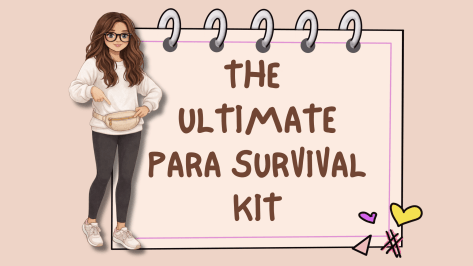
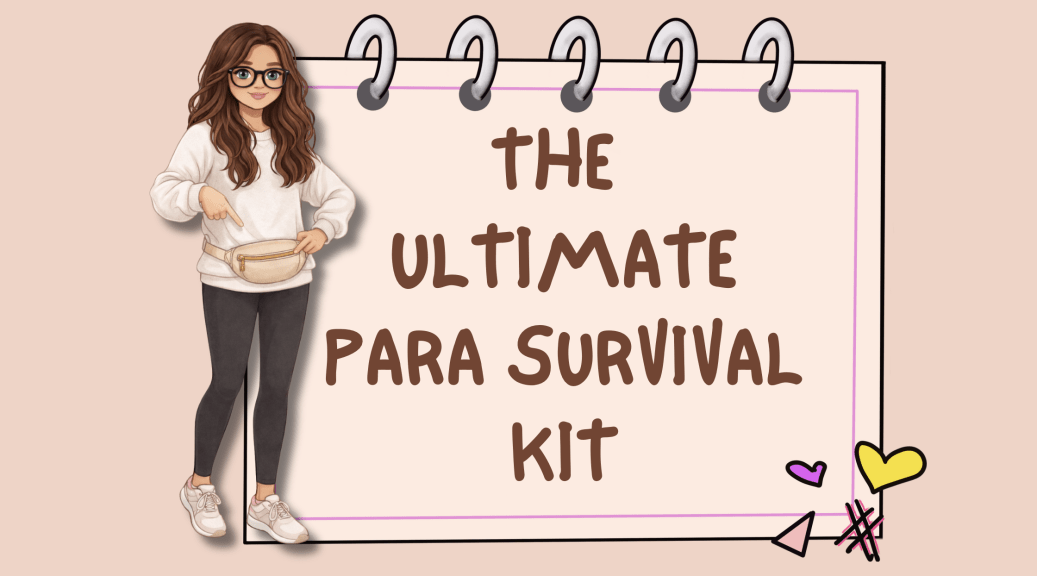
The Ultimate Paraprofessional Survival Kit (What I Carry Every Day in a Special Education Classroom)

This post contains affiliate links that may earn Classroom Chic a small commission.

Let’s just be honest for a second.

No one tells you that being a paraprofessional means being a little bit of everything—behavior support, problem solver, emotional regulator, and sometimes… a walking supply closet.

And after 4 years working as a paraprofessional in a self-contained autism classroom, I’ve learned one thing very quickly:

👉 You cannot rely on “just what the school provides.”
👉 You need your own system.
👉 And you need it on you at all times.

Because when something happens… you don’t have time to go searching for supplies.

So this is my real-life paraprofessional survival kit; the exact things I carry every day to get through the school day in a special education classroom.


The fanny pack that holds my entire day together

I never thought I’d be someone who wears a fanny pack to work.

But now? I won’t go without it.

In a special education classroom, you’re constantly moving:

  • from student to student
  • from one situation to another
  • from calm to chaos (sometimes very quickly)

You don’t always have time to run back to your desk.

So I keep everything I need right on me. My fanny pack is basically my mobile “para toolkit,” and it honestly makes my day so much easier.


A mini first aid kit (because something always happens)

If you work in a classroom, you already know… something always happens.

So I always carry:

Whether it’s a scratch, a picked finger, or a quick need for cleanup, having these on hand saves time and stress.


Gloves… and yes, I bring my own

Even though schools provide gloves, I always carry my own supply of:

In a self-contained special education classroom, you’re often helping with:

  • hygiene
  • changing
  • unexpected messes

Having your own gloves means you’re always prepared—no waiting, no scrambling.


Anti-bite and anti-scratch sleeves

This is one of those things you don’t fully understand until you’re in the role.

Even though my school provides protective sleeves, I chose to buy my own pair that I’m comfortable using.

They’re not needed every day—but when they are, you need them immediately.

And having them on you helps you respond calmly and quickly in situations where safety matters.


Hand sanitizer (non-negotiable)

This one is obvious—but also essential.

You’re constantly:

  • working with multiple students
  • touching materials
  • moving throughout the classroom

And you don’t always have time to stop and wash your hands.

So I always keep sanitizer in my bag. It’s quick, easy, and honestly one of the most-used items I carry.


Emergency fidgets (my secret weapon)

This is something I don’t think people talk about enough.

I always keep a few small fidgets in my bag, like:

  • pop-its
  • squeeze toys
  • simple sensory tools

Because sometimes, one small redirect can prevent a full escalation.

Having a fidget ready in that moment can completely shift a situation.

And if you’ve ever seen that work in real time—you know how valuable it is.


A small room air freshener (real life, no one talks about this)

Okay… this one is real life.

After helping change a student, especially in a bathroom space, the smell can linger—and it can be a lot.

So yes… I carry a small room air freshener in my bag.

It’s one of those things that seems small, but makes a huge difference in your environment and your comfort for the rest of the day.

And honestly, once you start carrying one, you won’t go back.


Personal essentials (because you matter too)

This job is demanding, and you’re on your feet all day.

So I always keep:

  • chapstick
  • feminine products
  • small personal items I might need

Because once the day starts, you don’t always have the chance to step away.

Taking care of yourself—even in small ways—makes a big difference.


Why having a paraprofessional toolkit matters

This isn’t about over-preparing.

It’s about:

  • reducing stress
  • staying ready
  • responding quickly
  • supporting your students better

When you know you have what you need, you feel more confident walking into every situation.

And in a job that can feel unpredictable, that confidence matters.


How to build your own paraprofessional survival kit

Every classroom is different, so your toolkit might look a little different too.

But a strong paraprofessional kit should include:

  • basic first aid
  • hygiene supplies
  • behavior support tools
  • personal essentials

The goal is simple:

👉 Make your day smoother
👉 Stay prepared
👉 Support your students without scrambling

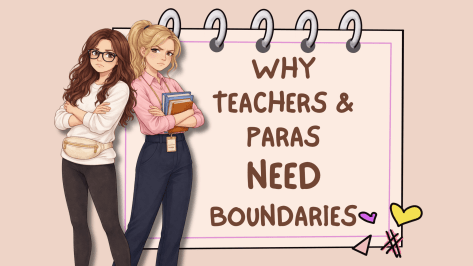
Why Teachers and Paraprofessionals Need Boundaries

Let’s talk about something that doesn’t really get said out loud in schools… but everyone kind of sees.

When you work in a classroom as a paraprofessional, you’re usually paired with the same teacher every day.

Same room.
Same students.
Same situations—sometimes all day long.

So naturally… you build a relationship.

You laugh.
You vent.
You survive the day together.

And honestly? That’s a good thing.

But there’s a line that can get crossed without anyone even realizing it.

And when it does, it can quietly affect the entire classroom.


When “we’re just close” starts to look like favoritism

Let’s just be real for a second.

When a teacher and a para get really close, it can start to look like favoritism—even if that’s not the intention.

It shows up in small ways:

  • always being paired together
  • inside jokes during the day
  • backing each other up no matter what

And sometimes you don’t even notice it happening.

But other staff do.

And let’s be honest… school environments can already feel a little cliquey.

So when it looks like there’s a “team within the team,” it can create tension fast.


The roles start to blur (and things get awkward… fast)

This is where it gets tricky.

Because at the end of the day, a teacher and a paraprofessional do not have the same role.

And when the relationship becomes too casual, the lines can start to blur.

You might start seeing things like:

  • “Wait… who’s actually making the decision here?”
  • moments where directions aren’t followed because it feels too informal
  • subtle power struggles (even if no one says it out loud)

It doesn’t always turn into a big issue—but it can create confusion in the classroom.

And kids pick up on that so fast.


And yes… sometimes it turns into a little workplace drama

Okay… we’re going to say it.

Even the best friendships have moments.

And when your “work bestie” is also the person you rely on all day in the classroom?

That tension doesn’t just stay in your head.

It shows up in:

  • short responses
  • awkward silence
  • that “we’re fine but not really fine” energy

And meanwhile… the students are just sitting there like 👀

It doesn’t take much for that shift to affect the flow of the classroom.


The part no one likes to admit

Sometimes it’s not even about conflict.

Sometimes it’s just… a vibe.

The whispering.
The laughing.
The “I’ll tell you later” moments.

And other staff notice.

It can unintentionally make people feel:

  • excluded
  • uncomfortable
  • or like they’re not part of the team

And in a school setting, where collaboration really matters, that can quietly impact the whole environment.


Students are always watching (yes… always)

This part is huge.

Students notice everything.

They notice:

  • who talks to who
  • who gets along
  • who seems “closer”

And they absolutely pick up on tone and body language.

So when adults model:

  • professionalism
  • respect
  • clear communication

That sets the tone.

But when things feel cliquey, tense, or overly personal…
they see that too.


So what DOES a healthy teacher–para relationship look like?

It’s not about being cold or distant.

You can absolutely:

  • enjoy working together
  • laugh
  • support each other
  • have a good dynamic

But it stays grounded in:

  • mutual respect
  • clear roles
  • professionalism

Think:

friendly… but not overly personal
supportive… but still structured


A little real-life perspective

As a paraprofessional, you’re in a unique position.

You’re working closely with one teacher every single day, and it’s easy for that relationship to naturally grow.

And honestly, that connection can make the day better.

But over time, I’ve realized something:

The strongest classroom environments are the ones where everyone knows their role—and respects it.

That balance makes everything run smoother.


Why boundaries actually protect YOU

This is the part people don’t always think about.

Boundaries aren’t about being distant.

They actually protect:

  • your professionalism
  • your role in the classroom
  • your peace

Because when things stay clear, you avoid:

  • confusion
  • tension
  • awkward situations later

And let’s be honest… we have enough going on during the day already.

We don’t need extra drama layered on top of it.


FAQs About Teacher and Paraprofessional Boundaries

Should teachers and paraprofessionals be friends?
It’s natural to have a positive relationship, but keeping professional boundaries helps maintain a healthy classroom environment and prevents misunderstandings.

Why are boundaries important between teachers and paras?
Clear boundaries prevent favoritism, role confusion, and conflict, while supporting a more effective and respectful classroom dynamic.

What is the role of a paraprofessional in the classroom?
A paraprofessional supports students, assists with instruction, and helps maintain classroom structure while working under the guidance of the teacher.


Final thoughts

At the end of the day, this isn’t about saying you can’t enjoy the people you work with.

It’s about recognizing that in a classroom setting, relationships impact more than just you.

They affect:

  • your team
  • your environment
  • and your students

And sometimes, keeping things just a little more professional…
actually makes everything feel a lot easier.