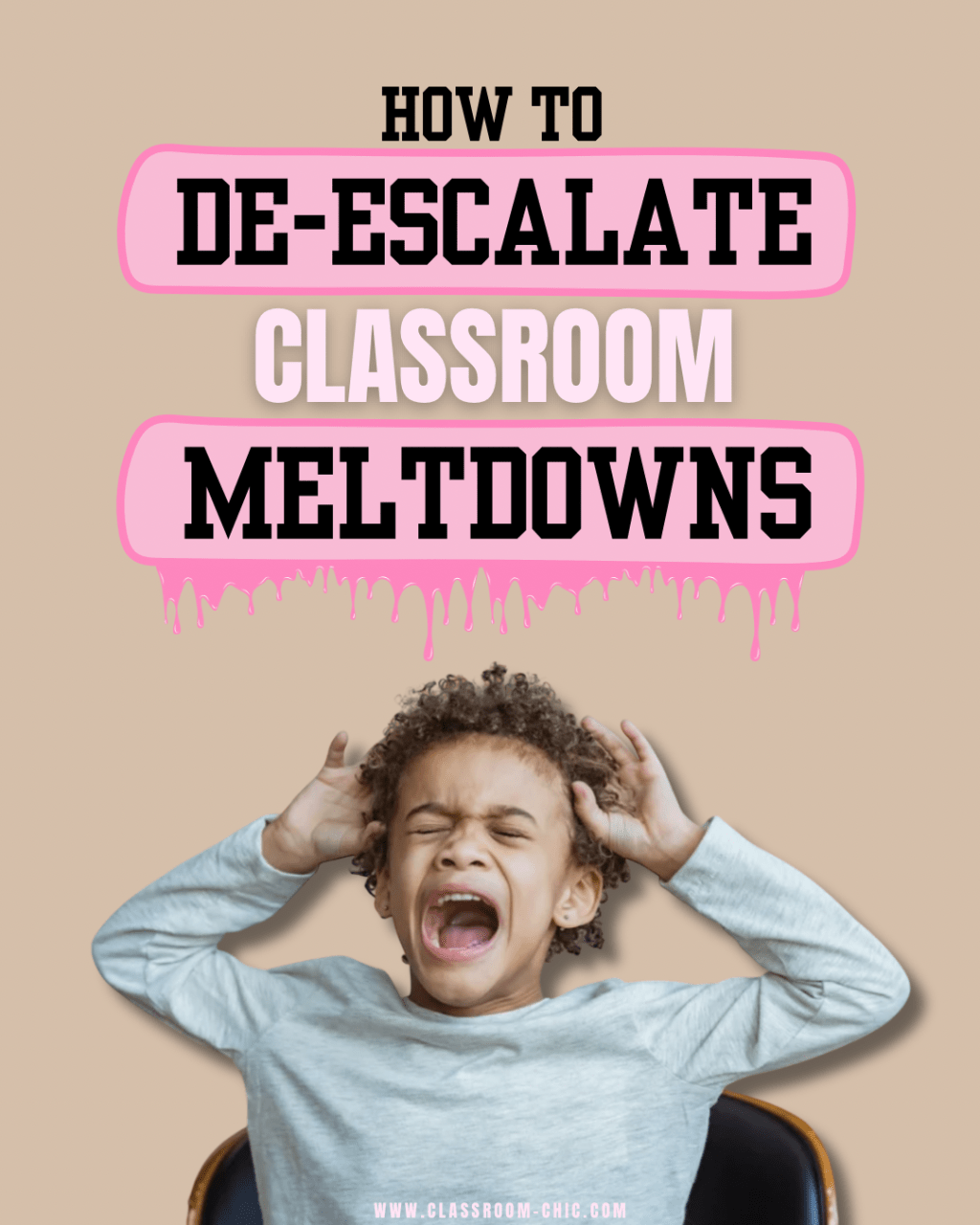
Every teacher knows the feeling: A student is on the verge of a meltdown, the energy in the room is shifting, and all eyes are on you. What you do next can either escalate the situation—or de-escalate it with grace and intention. Knowing how to de-escalate behavior in the classroom isn’t just about classroom management—it’s about building trust, safety, and connection.
In today’s post, we’re diving into calm, confident strategies for de-escalating student behavior, especially during those high-stress moments that can throw off your entire day. These strategies are simple, research-backed, and teacher-tested.
Why De-Escalation Matters
Students who display challenging behaviors are often communicating something they can’t say with words. Whether it’s anxiety, sensory overload, frustration, or trauma, their behavior is usually the tip of the iceberg. Reacting with anger or control can inflame the situation, while calm, supportive responses can help bring them back to regulation—and show the whole class what safe, responsive teaching looks like.
1. Stay Calm—Even If You’re Faking It
The most powerful tool you have in a tense situation is your own calm presence. Lower your voice, soften your body language, and resist the urge to match their energy. When you stay regulated, you signal to the student (and the rest of the class) that things are under control.
Tip: Speak slowly, give space, and use short, clear sentences like:
“I can see you’re upset. I’m here to help.”
2. Create Space Without Shaming
Sometimes a student just needs a moment to breathe. If a student is on the verge of an outburst, give them the option to step away—without drawing negative attention. A calm corner, peace table, or even a hallway pass can work wonders.
Example:
“Would you like to take a quick break and come back when you’re ready?”
Offering choice gives them a sense of control during a time when they may feel emotionally out of control.
3. Validate Feelings, Redirect Behavior
Acknowledging how a student feels doesn’t mean condoning their behavior. It means letting them know you see them and care. Once emotions are validated, you can begin to redirect or offer next steps.
Example:
“I can tell that math was really frustrating. Let’s take a few deep breaths, then we’ll figure it out together.”
Validation builds connection—and connection is a powerful path to regulation.
4. Use Nonverbal Strategies
Sometimes, less is more. Eye contact, a gentle nod, a calm hand signal, or simply standing near the student can help de-escalate behavior without needing to say a word. This is especially effective for students who become more reactive when verbally redirected.
Try This:
- A pre-taught hand signal for “take a break”
- A visual reminder card on their desk
- A calming gesture, like a hand on your heart, to model deep breathing
5. Follow Up, Don’t Forget
De-escalation doesn’t end when the outburst does. Quietly check in with the student later in the day, once emotions have settled. Let them know you care, and give them a chance to reflect without judgment.
Example:
“You seemed really upset earlier. I’m glad you’re feeling better now. Next time, how can I help you before it gets to that point?”
These conversations help students learn from the moment—and build a relationship based on respect and support.
Final Thoughts
De-escalating behavior is a skill that gets stronger with practice. It’s not about being perfect—it’s about being present. The more calm, consistent, and compassionate you are, the more your students will learn that your classroom is a safe place—even when things get tough.
We’re all in this together—and you’ve got this!
This post contains affiliate links which may earn Classroom Chic a commission.





 Classroom chic | Where Style Meets Learning
Leave a comment